Free landing page template or custom website: how to decide
Know when a free editable landing page is enough and when you need custom development, a CMS, ecommerce or an integrated application.
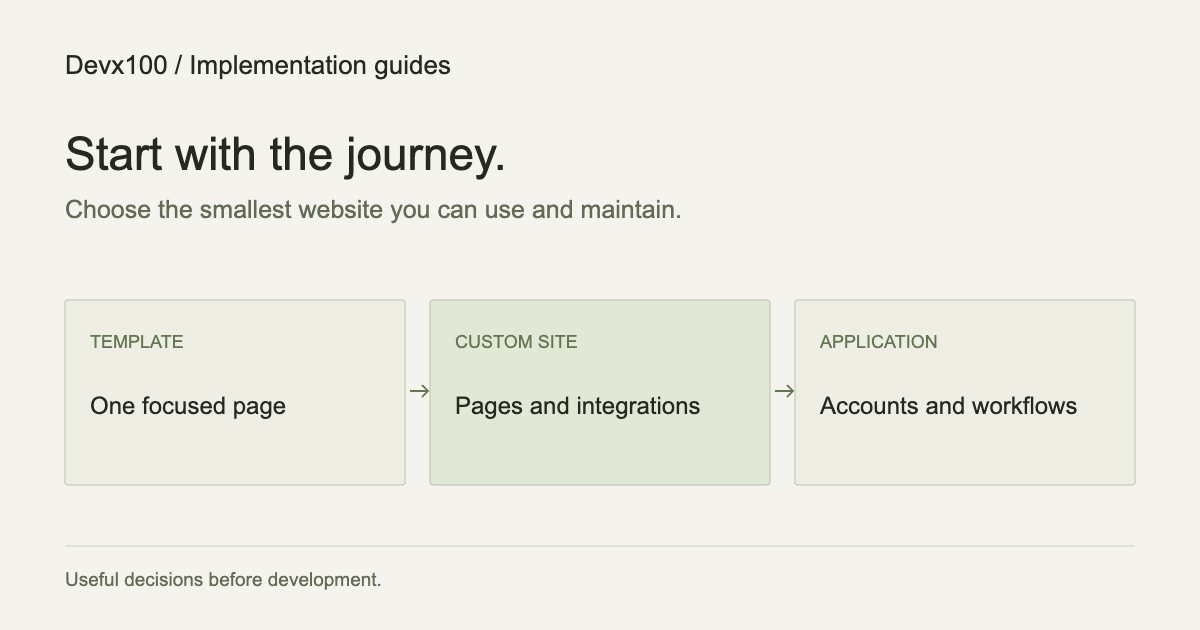
A template and a custom website solve different amounts of work. A template can give a small business a clear, editable page quickly. Custom development becomes useful when the customer journey, content model or connected behavior goes beyond that page.
The right choice is the smallest option that can serve your visitors and that you can maintain. Start by listing what people need to do, not the visual effects you want.
When a landing page is enough
A focused landing page can introduce a service, launch a product, describe an event or point visitors to a booking service. If the main action is “contact me,” “join this external list” or “book a time,” a static website may be sufficient.
Our free website templates let you change copy, images, colours and button links in a browser, then download the files. There is no account or payment requirement for that flow. Hosting and domains belong to the providers you choose.
Before publishing, replace sample content and verify the claims you keep. A template’s sample reviews, pricing or product interface are not evidence for your business. Test links and make sure the main action reaches a real destination.
What the design does not provide
A drawn conversation is not a customer-support backend. A product card is not a stock system. An email field needs an actual form provider or application endpoint if it is meant to collect submissions.
List every action implied by the design. For each one, identify the service or code that makes it work. If no backend exists, either connect one, change the action to a working external destination or remove the feature before launch.
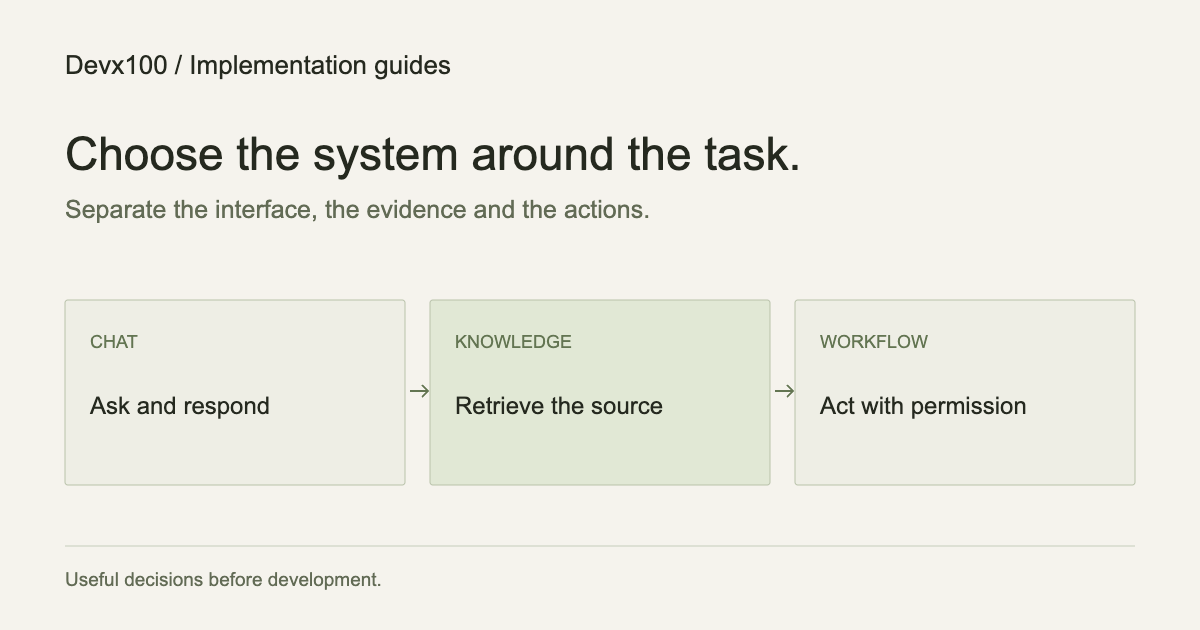
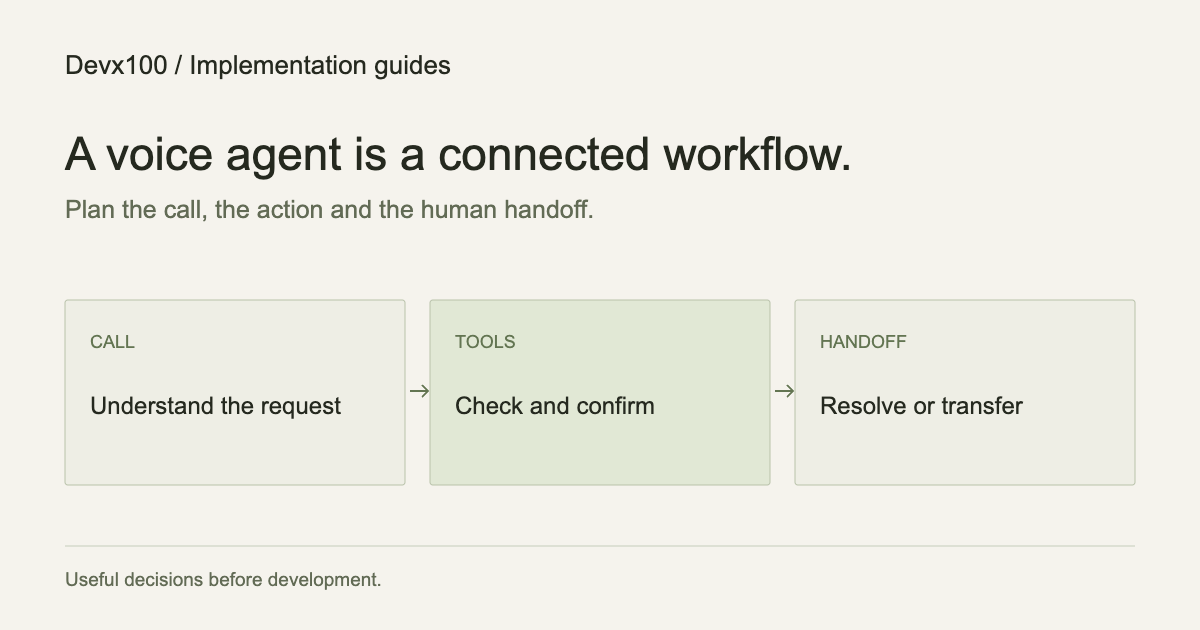
This distinction matters particularly for AI chat assistants and voice agents. Their interfaces can be demonstrated in a template, while the model, tools, authentication, calling infrastructure and operating controls are separate implementation work.
Signs you need custom development
Consider a custom website or application when several of these requirements apply:
- Different services need distinct pages and content structures.
- Nontechnical colleagues need to update a growing content collection.
- Customers need accounts or access to private records.
- A form must create or update something in another system.
- You need an approved checkout, inventory or fulfillment workflow.
- The design must support an unusual journey or an established brand system.
Custom does not have to mean a complete rebuild. A template can remain the starting point while a developer handles a specific integration or additional page type. Website development should be scoped around the missing behavior.
Choose a platform around maintenance
For a simple site, uploading static files may be manageable. If a team needs frequent updates, a CMS can be more appropriate. If the core task is selling products, a platform such as Shopify brings a different set of catalog and order responsibilities.
A Shopify implementation should cover product data, variants, navigation, app dependencies and the purchase-to-fulfillment journey. A static landing page alone cannot replace those systems.
For a startup product, decide what the first version must prove. An MVP needs a complete core journey and a way to learn from users. It does not need every feature imagined for the finished business.
Preserve existing search value during a redesign
If you already have a site, keep a list of existing pages before changing it. Note which URLs receive visits, links or enquiries. Match each valuable page to an equivalent destination, or keep it with updated content when its purpose still exists.
Google’s site migration guidance recommends mapping old URLs to appropriate new URLs and cautions against redirecting many unrelated pages to one irrelevant destination. A new homepage is not automatically a replacement for every service page.
Check titles, canonicals, internal links and the sitemap alongside the redirects. A beautiful redesign can still make an existing business harder to understand if it removes the pages that described its work.
Budget for the complete system
A free template eliminates the template fee. It does not eliminate every cost involved in running a business website. A domain, hosting, form delivery, commerce platform or AI provider can each have separate charges.
Ask who owns those accounts and who handles updates. If you hire a developer, agree what the handover includes: source files, deployment instructions, content editing and any ongoing support. Do not compare only the upfront design price while ignoring recurring dependencies.
A short decision checklist
Write one sentence for each of these:
- The main visitor and the action they need to complete.
- The pages and information they need before acting.
- The systems that must receive or return data.
- The person who will keep content and integrations current.
- The evidence that the finished journey works.
If those answers describe one page and a working external link, start with a template. If they describe accounts, several page types and connected workflows, scope the missing implementation.
You can start building for free, read our delivery process, or prepare a project brief. Choosing paid help is optional; the free tools stay available independently.